Third-Party Security Risk Is Now the Primary Attack Vector
This article explains why vendor governance must mature and explains why fintechs need continuous monitoring, not annual questionnaires.

Introduction
A recent Verizon DBIR finding makes one thing clear: attackers still lean on third parties to get inside.
In fintech, that is not a side issue. It can hit payments, customer data, and release schedules all at once.
That is why Third‑Party Security Risk Is Now the Primary Attack Vector — Why Vendor Governance Must Mature matters now.
Annual questionnaires are too slow for cloud and AI vendors that change fast. The real question is how fintech teams keep up without drowning in manual reviews.
Why Vendor Risk Changed
Vendors Became The Attack Path
Attackers often go after the vendor because it is the softer target.
If that vendor has access to your systems, data, or workflows, the breach can reach you without ever touching your own perimeter. That is the part most teams still treat like a theory instead of a live risk.
Fintech vendors are especially attractive because they sit close to money movement, identity checks, and customer service. Common exposure points include SaaS integrations, API access, shared credentials, and support tools. The CISA Cybersecurity Advisories feed is a good reminder that active threats move fast.
The problem is not just that vendors exist. It is that they often sit inside your operating process.
That makes them part of the business, not just part of the vendor list.
Cloud And AI Move Faster
Cloud-native vendors change more often than legacy providers. They update permissions, shift configurations, add subprocessors, and adjust dependencies on a regular basis. A vendor that looked fine last quarter may look very different today.
AI vendors raise the pace even more. You have to think about model drift, data retention, training use, and opaque subprocessors. Vendor risk is no longer just about a static security posture. It is about behavior changes.
That is the key shift.
You are not only reviewing who the vendor was when the contract got signed. You are watching what the vendor is doing now.
Why Fintech Feels It First
Fintech feels vendor risk fast because one weak partner can affect consumer data, payment uptime, and sponsor bank trust at the same time. That risk spills into compliance, not just security.
Say a fintech uses a cloud-based KYC vendor. If that vendor changes a workflow or delays a notice, the fallout can delay a launch, trigger legal review, and put audit readiness under pressure. That is why vendor risk in fintech is never just vendor risk.
It becomes a business issue fast.
And once it becomes a business issue, the old “review it once a year” habit stops making sense.
Where Annual Questionnaires Fail
Point-in-Time Reviews Miss Drift
Questionnaires capture a moment.
They do not show what happens after the form is signed.
That matters because vendor settings can drift between annual reviews. Access can change. Subprocessors can change. Incident response terms can change. By the time you circle back, the risk may already be in production.
That is the flaw.
A clean answer in March does not mean the vendor is still clean in October.
Static Evidence Is Not Enough
SOC 2 reports, questionnaires, and spreadsheets still have value. They help you document the baseline. But they do not prove that a vendor is behaving the same way every month.
The CFPB guidance on service provider oversight is useful here because it pushes beyond paperwork. Documentation matters. Operational control matters more.
A lot of teams confuse evidence with oversight. Those are not the same thing. Evidence tells you what the vendor said. Oversight tells you what the vendor is doing.
The Cost Of Waiting
Waiting for the next annual review can turn a small issue into a real interruption.
If a vendor has a disclosure gap or an access problem, the delay in catching it can pause a release or trigger customer complaints. Then the work spreads. Engineering gets pulled in. Legal gets involved.
Product loses time. Leadership ends up explaining the issue instead of shipping the next feature.
That is the hidden cost.
The IBM Cost of a Data Breach Report keeps showing why speed matters once a problem starts. The longer a vendor issue sits unnoticed, the more expensive it gets to clean up.
How To Build Continuous Monitoring
Step 1. Tier Vendors By Impact
Start by sorting vendors by what they can touch.
A low-risk marketing tool should not get the same treatment as a cloud host, payments processor, or AI provider embedded in customer workflows. If everything is critical, then nothing is.
A simple tier model works well:
- Tier 1: High data access, privileged access, or customer-facing impact
- Tier 2: Moderate workflow access or limited sensitive data exposure
- Tier 3: Low-risk tools with little operational dependency
For Tier 1 vendors, collect stronger evidence: SOC reports, incident history, subcontractor lists, and contract terms. For lower-risk tools, keep the review lighter.
The point is focus.
Spend the most time where a vendor problem would actually hurt you.
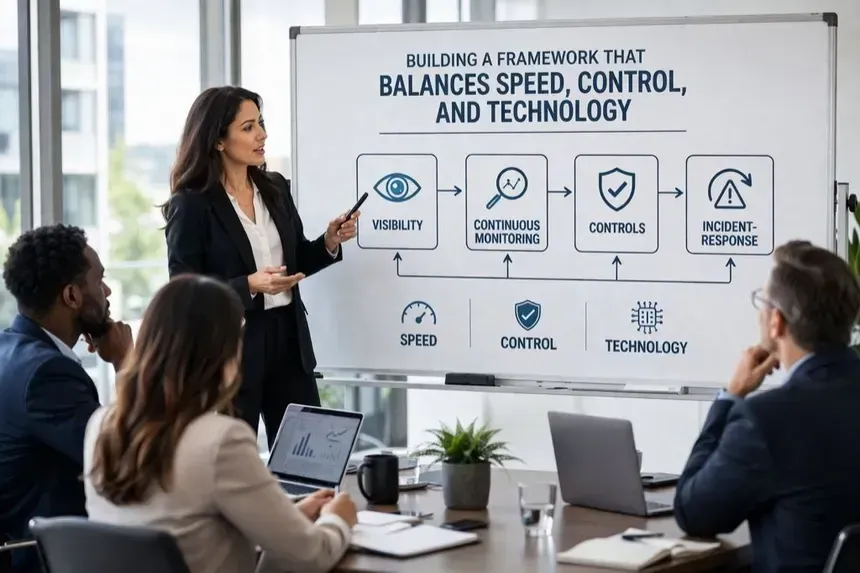
Step 2. Track Signals All Year
Continuous monitoring does not need to be heavy.
It needs to be steady.
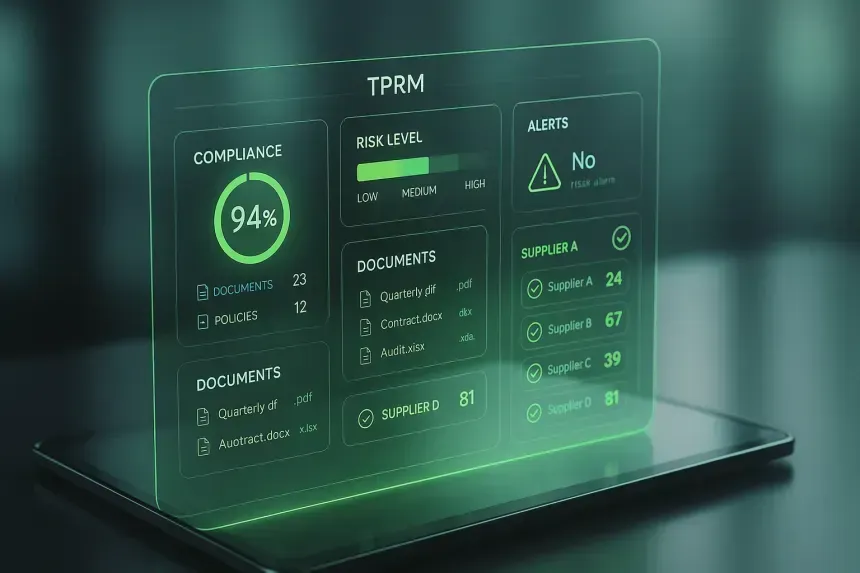
Watch for access changes, uptime issues, breach notices, policy updates, and new certifications. Pull from sources that update in real time, like CISA alerts, vendor trust centers, and cloud status pages such as the AWS Health Dashboard and Google Cloud Personalized Service Health.
A simple alert flow into Jira, Slack, or a shared risk log keeps the right people informed.
If a vendor changes something important, your team should know before the next release meeting.
That is the whole idea.
You do not need more paperwork. You need earlier signal.
Step 3. Tie Monitoring To Decisions
Monitoring only works if it leads to action.
Otherwise, you are just collecting more files.
Decisions should be clear. Re-approve the vendor. Restrict access. Update the contract. Pause the launch. Escalate to legal or product. Each trigger needs an owner, and each owner needs to know when to move.
That is where a lot of programs fall apart.
The alerts exist. The review exists. The decision does not happen.
This is also where a fractional CCO helps. Comply IQ can design and run an always-on vendor governance process so a fintech does not need to hire a full-time compliance leader just to keep pace with fast-moving vendors. If your team needs that kind of support, Comply IQ is built for it.
What Good Vendor Governance Looks Like
Set Clear Ownership
Vendor governance falls apart when nobody owns it end to end.
Compliance, security, procurement, legal, and business teams all have a role, but one person or function needs final accountability. Without that, every issue gets passed around like a hot potato.
A simple RACI helps. Who approves? Who escalates? Who handles renewals? Who tracks follow-up? If that is fuzzy, the process will slip. And when it slips, someone always says, “I thought another team had it.”
That sentence is usually a warning sign.
Build Contract Controls
Your contract should match your monitoring process.
If you want fast notice of problems, the contract should require it. If you care about subcontractors, the vendor should not be able to add them without rules.
The main clauses to watch are:
- Breach notice timelines
- Audit rights
- Subcontractor limits
- Data use restrictions
- Exit and transition support
AI vendors need extra attention. Look closely at training data, output use, retention, and subprocessors. Also review renewal terms before the vendor becomes embedded in customer-facing workflows.
Once a tool is inside daily operations, bad terms are harder to fix.
That is why contract review should not be treated like a back-office formality. It is part of control.
Test The Program In Real Life
A vendor governance program should be exercised, not just written down.
Tabletop tests are a simple way to find gaps.
Try a short scenario around a payments outage, a data incident, or a regulator question. Who calls the vendor? Who pauses the launch? Who notifies leadership? A 30-minute test can expose weak handoffs fast.
That matters more than people think.
A real incident will not wait for your next policy review. If you cannot walk through the steps calmly in a meeting, you will not do it well under pressure.
And if the process feels awkward in a tabletop, it will feel worse in a real event.
Conclusion
Vendor risk is no longer a once-a-year checklist problem.
Fintech teams need continuous monitoring, clear ownership, and contracts that match how vendors actually operate.
Start with your top vendors and close the biggest gap first.
If you need senior compliance help to make that process real, Comply IQ can help you build it without adding a full-time hire.
FAQs
Q: What Is Third-Party Security Risk In Fintech?
A: Third-party security risk is the risk that comes from vendors, service providers, and subprocessors that can access your data, systems, or workflows. In fintech, that matters more because those vendors often touch payments, identity, customer records, or reporting.
Q: Why Are Annual Questionnaires Not Enough?
A: Annual questionnaires only show a snapshot in time. A vendor can answer every question correctly and still change access, subprocessors, or security settings later in the year. That is why questionnaires should support monitoring, not replace it.
Q: Which Vendors Should Be Monitored Continuously?
A: Focus on vendors with privileged access, sensitive data, or customer-facing impact. Cloud hosts, AI providers, payment processors, identity tools, and fraud vendors usually belong at the top of the list. Business criticality matters more than vendor size.
Q: What Evidence Should Fintechs Collect?
A: Collect SOC 2 reports, penetration test summaries, breach notices, uptime history, and security certifications. For AI vendors, also track data usage terms, retention controls, and subprocessors. Keep contract updates and renewal records in one shared system.
Q: How Can A Small Team Manage Vendor Governance?
A: Start with your top 10 critical vendors and build from there. Use a simple tier model, a steady monitoring cadence, and one owner for escalation. Templates and dashboards can reduce manual work fast.
Q: How Do Cloud Vendors Change The Risk Picture?
A: Cloud vendors can change permissions, configurations, and dependencies more often than legacy vendors. That means a vendor that looked safe last quarter may look very different today. Continuous monitoring helps catch those shifts before they affect operations.
Q: Does A Fractional CCO Help With Vendor Governance?
A:
Yes. A fractional CCO can design the process, set escalation rules, and help the team keep it running without adding full-time overhead. For lean fintech teams, that is often the fastest path from ad hoc reviews to a real vendor governance program.