AI‑Driven Threats: How LLM‑Enabled Attacks Reshape Risk
This article explains the risks and the controls that still work for fintech teams in light of AI-driven threats.

Introduction
Fraud is faster now.
AI-Driven Threats: How LLM-Enabled Attacks Are Reshaping Operational Risk Controls is no longer a future problem. It is already showing up in fintech workflows that move money, open accounts, and approve sensitive changes. Deepfake calls, synthetic identities, and AI-written phishing can get a bad request in front of the right person before anyone slows it down.
That creates real pressure on risk, fraud, and compliance teams. More false approvals. More review fatigue. More missed red flags.
This guide breaks down where the threat has changed and which controls still hold up when the request sounds real.
How LLM Attacks Change Risk
The new attack surface
Generative AI lowered the skill barrier for attackers. A scam that once took time and decent writing now takes minutes, and it can look polished enough to pass a quick glance.
That matters because the attack does not stay in one channel. It can show up in onboarding, payments, customer support, vendor management, and internal approvals. The Microsoft Digital Defense Report 2025 and CISA’s AI safety tip sheet both point to the same shift: AI is making social engineering faster, cheaper, and harder to spot.
Old fraud usually had tells. Bad spelling. Odd timing. Sloppy pressure.
That is changing. Now the message can sound like your CEO, your vendor, or even a regulator.
Deepfake and phishing use cases
Voice cloning is the part that catches people off guard. A call that sounds like an executive can slip past a rushed rep who is used to helping people move quickly.
AI-written phishing emails are just as dangerous. They can copy tone, mention real team members, and land right when someone is most likely to respond without checking. The FTC’s impersonator scams page shows how familiar this pattern is, even when the scam itself is old.
Automated phishing kits make it worse. They can generate the email, the fake login page, and the follow-up messages in one pass. A support rep sees a vendor request, clicks the link, and the attacker is inside the workflow.
Why legacy controls fail
Static rules do not move fast enough. Neither do one-time training sessions or random spot checks.
The bigger issue is ownership. Many fintechs split the risk across fraud, security, legal, and compliance. Each team sees part of the problem, but no one always owns the full chain. That is how a weak process becomes a real loss.
The NIST AI Risk Management Framework gives useful language for the problem. The real test is whether the controls work when the request is live, urgent, and believable.
The LLM Threat Framework
Threat 1 — Deepfake voice fraud
Deepfake voice fraud works because people trust familiar voices. Attackers pose as executives, vendors, or customers and push for a payment, an account change, or a quick override.
The weak spots are usually obvious after the fact. A callback step gets skipped. A rep feels rushed. A manager assumes the request already cleared. Treasury, wire transfers, and support escalations are exposed because they are built for speed.
A common failure looks like this: a fake CFO calls in, says a payment has to go out before noon, and asks for a change in the payee details. If the team does not slow the request down, the loss can happen before anyone verifies the call.
Threat 2 — Synthetic identity abuse
Synthetic identity fraud blends real and fake data so it can pass early checks. It is not always obvious at onboarding, which is what makes it hard to catch.
Some of these profiles sit quietly for weeks or months. They build a history, then get used for credit abuse, account takeover, or mule activity. NIST’s synthetic identity fraud glossary entry and identity Proofing guidance both help explain why a strong first check is not enough.
This risk exposes a common gap. A fintech may verify identity at signup, then monitor too lightly after that. If the first gate is strong and the next 90 days are thin, the attacker still has room to move.
Threat 3 — Automated phishing kits
LLM-driven phishing kits can create believable messages, fake login pages, and follow-up responses at scale. They can target employees, customers, and third parties with slightly different wording and timing.
That matters because phishing is not just an email issue. It becomes an operational risk problem when it leads to credential theft, unauthorized changes, or business email compromise. The FBI’s Business Email Compromise guidance shows how a fake request can turn into a real money loss.
The working model is simple: detect, verify, restrict, and rehearse. If one of those pieces is weak, the attacker only needs one convincing request.
Controls That Actually Work
Step 1. Tighten governance
Policies need to cover AI-driven fraud, not just broad cyber risk. If your rules still assume a scam will look sloppy, they are already behind the threat.
Ownership matters too. Decide who owns the call when a fake request crosses fraud, security, and compliance lines. Spell out approval thresholds, escalation paths, and exception handling in plain language so the process works during a busy shift, not just in a policy review.
Step 2. Hard-code verification
High-risk actions need more than a quick confirmation. Payment changes, vendor updates, bank detail changes, and sensitive account requests should require out-of-band verification, callback steps, and dual approval.
Role-based access also matters. A support rep should not be able to push the same change as finance, and step-up authentication should kick in when the request is unusual, urgent, or high value. The FFIEC guidance on authentication and access is useful here.
Then test the real behavior. Do people still follow the process when a fake executive is pushing hard? If not, the control exists on paper, not in practice.
Step 3. Test the controls
Annual reviews are too slow. Move to a recurring testing cadence that checks the workflow, not just the written policy.
Use scenario-based tests for synthetic identity, voice fraud, and phishing-led compromise. Track failure rate, time to detect, and time to contain. The NIST AI RMF Playbook is useful because it pushes teams toward repeatable measurement, not one-time cleanup.
Keep the results in a format that can stand up to audit or examiner review. That means clear ownership, dated findings, and documented remediation. If the control improves, the record should show it.
Operating Model and Response
Build cross-functional ownership
Risk, product, engineering, fraud, legal, and compliance need one playbook. If each team runs its own version of the process, gaps show up right when the pressure is highest.
Keep the governance cadence light but consistent. Review incidents, exceptions, and control gaps on a fixed schedule. That keeps ownership clear and avoids the “I thought someone else handled it” problem.
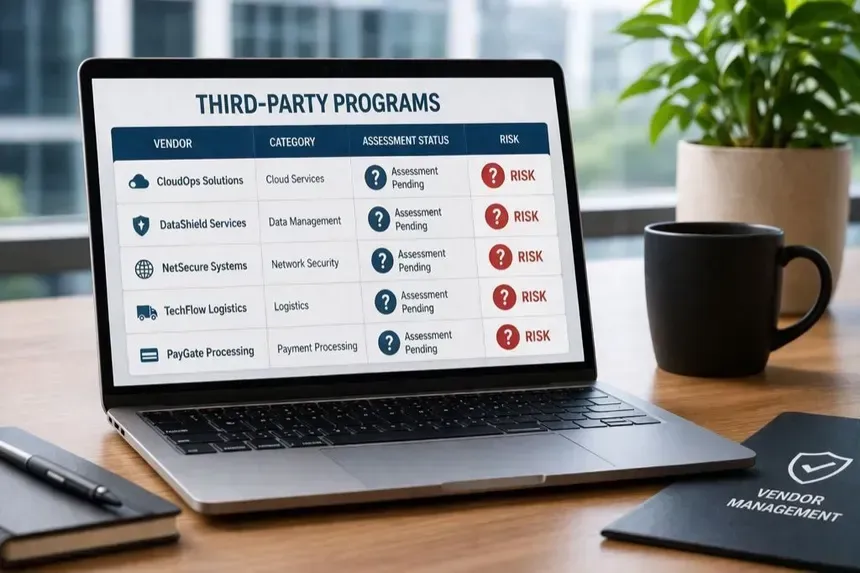
Strengthen vendor oversight
Third-party tools, call centers, and onboarding vendors are part of the control surface. If they sit in the workflow, they sit in the risk.
Ask direct questions. Do they use AI in scoring or review? What authentication do they support? What logs do they keep? How fast do they notify you about suspicious activity? Compare vendors on response speed, evidence quality, and policy fit, not just price.
Rehearse incident response
Tabletop exercises should feel close to the real thing. Test a fake executive call. Test a synthetic account cluster. Test a phishing breakout that reaches multiple teams in the same day.
Preserve evidence early. Save logs, call records, screenshots, message headers, and approval trails. That makes the response cleaner and helps if a regulator, auditor, or board member asks for the timeline later.
Conclusion
LLM-enabled threats are not just a security issue. They are an operational risk problem that can hit payments, onboarding, support, and internal approvals at the same time.
The answer is not more noise. It is tighter ownership, stronger verification, regular testing, and cleaner evidence. Start with the workflows that move money or change accounts, then build the control rhythm that proves the process works when pressure is high.
FAQs
Q: Can AI detection tools stop these attacks?
A: Not by themselves. Detection tools can flag odd content or strange behavior, but they miss a lot of edge cases. You still need process controls and human verification. The attacker only needs one weak handoff.
Q: What control should come first?
A: Start with the highest-risk workflows: payments, account changes, onboarding, and support escalation. Those are the places where one fake request can create direct loss. That gives you the fastest risk reduction. It also helps leadership focus on the right spots first.
Q: How often should testing happen?
A: Quarterly scenario testing is a good baseline. High-risk processes should also get a monthly review.
If the business is growing fast or launching new products, increase the pace. The review cycle should match the level of change.
Q: How do smaller fintechs handle this without a big team?
A: Use a priority-based approach and focus on the workflows that move money or change accounts. You do not need a large staff to make those controls tighter. Fractional senior support can fill the gap when you need judgment, documentation, and testing discipline. That gives lean teams a better shot at staying ahead of the risk.
Q: What evidence do regulators want?
A: They usually want policies, testing logs, escalation records, and remediation tracking. They also want to see that the process is consistent. A clear paper trail matters more than a polished explanation. If the controls are real, the evidence should make that obvious.
Q: Do voice checks still matter?
A: Yes, but only as one layer. Voice alone is too easy to spoof now. Use voice checks with callback steps, out-of-band approval, and role-based permission limits. That combination is much harder to fake.
Q: Should phishing training be changed?
A:
Yes. Generic annual training is not enough anymore. Keep training tied to live workflows like payment requests, vendor changes, and support escalations. People remember what they practice, not what they skim once a year.