Centralizing AI-Related TPRM: Stop Governance Chaos
Learn how to centralize AI-related TPRM across product, legal, engineering, and procurement so fintech teams reduce risk and launch faster.

Introduction
AI reviews are breaking down in too many fintech teams.
When vendor checks live in Slack, Jira, spreadsheets, and email, launches slow down and audit trails get messy fast. People think someone else owns the review. Then nobody can show the full path from intake to sign-off.
This guide explains how to centralize AI-related TPRM before that sprawl turns into a real problem. You’ll see where fragmented governance fails, what AI vendor risk actually covers, and how to build one workflow across product, legal, engineering, security, and procurement.
Why Fragmented Governance Fails
The hidden cost of scattered reviews
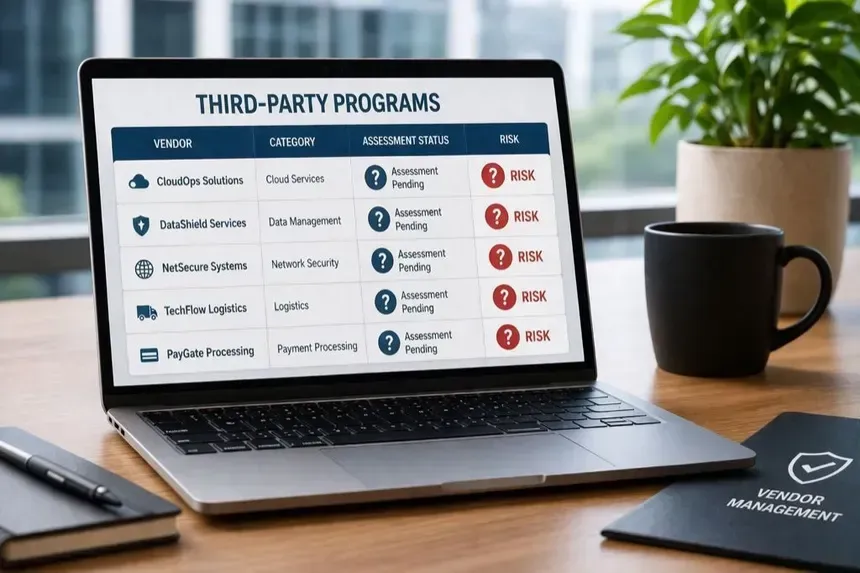
AI vendor risk gets messy when every team reviews it somewhere different.
Product leaves notes in Jira. Legal replies by email. Security asks for one more doc. Procurement assumes the deal is already approved. By the time anyone compares notes, the team has three versions of the truth and no clean decision.
That split creates duplicate work and mixed calls. One team may say a tool is fine, while another later finds it touches customer data, supports a regulated workflow, or changes how a decision gets made. That is how AI-related TPRM turns into a pile of half-finished approvals.
A common warning sign is simple: no one can show the full path from intake to sign-off. There is no inventory, no risk tiering, and no clear owner. The FDIC third-party risk manual makes the point clearly: when oversight is spread too thin, accountability gets fuzzy.
The compliance and launch risk
Fragmented AI-related TPRM is not just admin pain. It slows launches when AI tools touch underwriting, support, fraud, marketing, or customer data.
Regulators want consistency and traceability. The NIST AI Risk Management Framework treats AI risk as a lifecycle issue, not a one-time approval. The FTC’s AI hub also shows why claims about AI need proof, not hand-waving. And if an AI tool affects credit decisions, the CFPB’s guidance on complex algorithms reminds firms that explainability still matters.
Think of scattered governance like a half-built bridge. It looks usable until the first real load shows up.
What AI-Related TPRM Covers
Map the AI vendor lifecycle
AI-related TPRM covers the full path from intake to renewal and offboarding. That means the first request, the due diligence review, the contract terms, the launch decision, and the later check-ins when the vendor changes something. If the team only reviews AI once at purchase, it misses most of the risk.
In fintech, AI vendors show up everywhere. They power chatbots, fraud tools, KYC automation, underwriting support, content generation, and internal copilots. The CFPB’s research on chatbots in consumer finance is a good reminder that customer-facing AI can create service and accuracy issues even when it looks simple.
You also have to separate fully outsourced AI models from AI features buried inside broader SaaS tools. A small feature inside a vendor platform can still create privacy, fairness, or security problems if it touches regulated work.
Identify the core risk domains
A good AI-related TPRM review usually asks about six risk areas:
- Data privacy
- Security
- Model behavior
- Bias and fairness
- Explainability
- Regulatory impact
Each area needs different evidence. Privacy may need a data map and retention terms. Security may need a SOC report and incident history. Regulatory impact may need legal review and use-case limits. The NIST Privacy Framework is useful when the tool handles customer data or profiling.
If the system affects decisions, model risk matters too. The retired FDIC model risk guidance is still relevant, because many AI tools behave like models, even when the vendor uses a different label.
Separate AI TPRM from generic vendor review
Normal vendor review is not enough. A standard procurement checklist may cover price, uptime, and basic security. It will not answer model-specific questions.
AI-specific review asks things like:
- What data trained the model?
- Can humans override the output?
- Are there prohibited uses?
- Does the vendor monitor drift?
- What changes trigger re-review?
That is the real difference. AI-related TPRM is not procurement with a new label. It is a deeper review of how the tool behaves and where it can go wrong.
Use a Centralized Framework
Step 1. Build one intake path
Start with one intake path for every AI tool, model, and vendor request. Do not let reviews begin in side channels.
Your intake form should capture the basics right away:
- Business purpose
- Data types involved
- Customer impact
- Launch deadline
- Internal owner
- Vendor name
- Whether the tool makes or supports decisions
That matters because late surprises are expensive. If the team waits until the end to ask whether the tool touches sensitive data, the whole launch can stall.
Use a simple severity rating so teams can route low-, medium-, and high-risk tools quickly. The point is not to slow everything down. The point is to make sure AI-related TPRM starts in the same place every time.
Step 2. Assign one accountable owner
Fragmented governance fails when nobody owns the final call. Someone has to pull the threads together and settle the tradeoffs. That central owner does not need to do every review alone. They coordinate legal, product, engineering, security, and procurement, then make sure the work ends in one decision and one record.
For many fintechs, a compliance or risk lead is the right anchor point. A fractional CCO can give a growing fintech one accountable compliance leader without adding a full-time executive. It helps replace scattered AI reviews across Slack, Jira, and ad hoc counsel with one workflow that product, legal, engineering, and vendor teams can actually follow.
Step 3. Standardize review gates
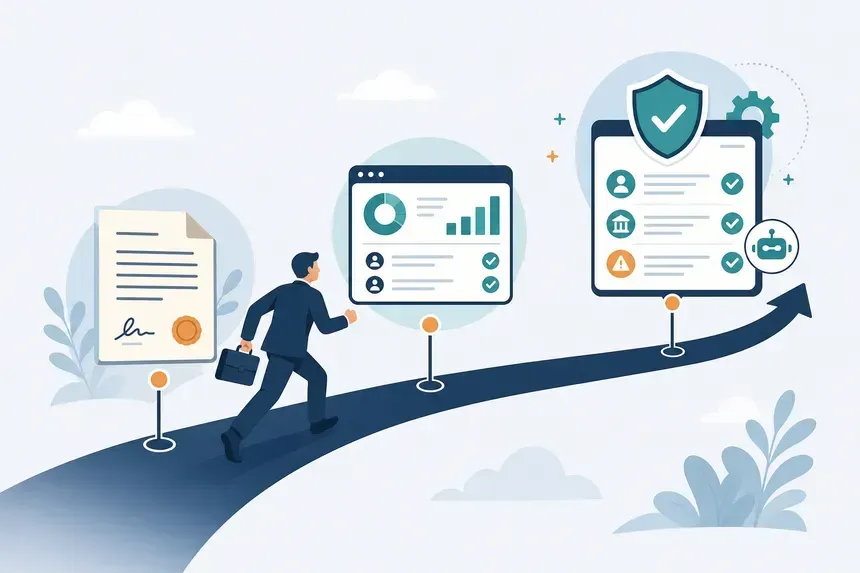
A strong AI-related TPRM process should use the same gate sequence every time:
- Intake
- Risk tiering
- Due diligence
- Contract review
- Testing
- Approval
- Post-launch monitoring
Each gate should have clear exit criteria. For a low-risk tool, that may mean a lighter evidence set. For a higher-risk tool, you may need deeper testing, tighter contract terms, and formal approval.
Use outside references to keep the gates grounded. The NIST AI RMF Playbook is helpful for practical implementation. The NIST AI Resource Center and AI RMF crosswalks can help you line up AI review with broader governance.
Design the Operating Model
RACI across core teams
A simple RACI keeps AI-related TPRM from turning into a group chat with no owner.
- Product recommends the use case.
- Legal reviews regulatory and contract risk.
- Engineering checks controls and technical fit.
- Security reviews access, data handling, and incident response.
- Procurement manages vendor flow and terms.
- Compliance coordinates the process and keeps the record clean.
This keeps people from repeating the same question in five places. It also stops the “I thought someone else handled it” problem that drains time and causes launch delays. Keep the model simple enough for a small fintech team to use. If the RACI gets too fancy, people will ignore it.
Build the evidence package
Keep the evidence for each AI vendor in one place. Use the tools your team already knows, like Jira, Notion, Google Workspace, or Confluence.
The file should hold the basics:
- Risk tier
- Due diligence questionnaire
- SOC report
- Model documentation
- Incident history
- Sub-processor list
- Testing results
- Contract clauses
- Approval record
- Monitoring plan
That single file makes audits and regulator questions easier to handle. It also cuts the scramble when someone asks, “Where is the proof?”
Create monitoring and escalation rules
Approval is not the finish line. Vendors update models, change data sources, and add features all the time.
Set clear triggers for re-review:
- New data inputs
- Material incidents
- Performance drift
- Scope expansion
- Regulatory changes
- Contract changes
If a tool could affect customers, model outputs, or compliance duties, the issue should move fast to the central owner. For security and response planning, the NIST Cybersecurity Framework 2.0 is a useful anchor.
Common Mistakes to Avoid
Mistake 1 — Treating AI as just another vendor
AI needs more scrutiny than a normal software purchase. It can affect fairness, explainability, and data use in ways a standard checklist will miss. A tool can look harmless and still influence a regulated decision. That is why AI-related TPRM has to go beyond procurement.
Mistake 2 — Running reviews in silos
When legal, security, and product each run their own process, they can approve different versions of the truth. That creates inconsistent controls and weak auditability. A central workflow fixes that. It also cuts rework and keeps launches moving.
Mistake 3 — Skipping post-launch oversight
Approval is not the end. Model drift, vendor updates, and new use cases can change the risk profile fast.
Monitoring has to be part of the operating model, not an extra step people remember later.
Conclusion
AI-related TPRM breaks when ownership is scattered and controls live in too many places.
One workflow, one owner, and one evidence trail will save time and reduce noise. If you want that operating model without adding full-time overhead, a fractional compliance leader can help you put it in place and keep it working as your AI footprint grows.
FAQs
Q: What is AI-related TPRM?
A: It is third-party risk management for AI tools, models, and vendors. It covers the full lifecycle, not just procurement.
Q: Which AI vendors need review?
A: Any tool that uses sensitive data, supports regulated decisions, or affects customers should get reviewed. That includes chatbots, underwriting tools, fraud tools, and internal copilots.
Q: How often should AI vendors be re-reviewed?
A: Use a risk-based cadence. Re-review when something material changes, not just once a year.
Q: Who should own AI TPRM?
A: A central compliance or risk leader is usually the best anchor point. That person can coordinate across teams and keep one workflow in place.
Q: What evidence should we collect?
A: Keep the risk tier, due diligence, contract terms, testing, approval record, and monitoring plan in one place. Centralized records make audits much easier.