Due Diligence Considerations For AI Vendors
This guide breaks down due diligence considerations for hiring AI vendors, including risk, data, controls, contracts, and ongoing oversight for fintech teams.

Introduction
AI vendors can create compliance trouble fast. A polished demo can hide weak controls, unclear data use, and gaps that only show up after launch.
That is why fintech teams need a repeatable way to review AI vendors before they sign anything. In this guide, you’ll use a simple 5R review to check risk, controls, contracts, and ongoing oversight without turning every vendor review into a legal scramble.
Why AI Vendors Need Extra Scrutiny
AI vendors are not ordinary software vendors. The model can change, the output can drift, and the business impact can show up in places your team did not expect.
A back-office summarizer is one thing. A customer-facing chatbot or decision-support tool is another.
That is why due diligence considerations get tougher when third parties sit inside customer workflows. If the tool touches disclosures, approvals, or sensitive data, the review needs to go deeper.
Step 1. Map the AI use case
Start by naming the exact job the tool does. Is it helping staff draft notes, scoring applicants, or supporting an approval decision?
That answer sets the bar. A tool that only organizes internal work needs a lighter review than one that affects pricing, disclosures, or access to credit.
The FTC AI guidance and the CFPB’s AI resource page are good reminders that the use case drives the review.
Step 2. Identify hidden risk layers
AI risk usually shows up in three buckets: model risk, data risk, and operational risk.
Model risk covers bias, drift, weak testing, and poor explainability. Data risk covers privacy, retention, training rights, and access. Operational risk covers outages, bad outputs, and broken handoffs between product, legal, and engineering.
A vendor tool can look harmless and still create a consumer complaint, a disclosure issue, or a launch delay.
Step 3. Separate hype from control reality
Vendors love clean dashboards and confident claims. But due diligence considerations should focus on proof, not pitch decks.
Ask for logs, governance documents, validation results, incident handling steps, and human override controls. Then compare them with public guidance from the NIST AI Risk Management Framework and the CFPB’s guidance on AI and credit denials.
If the controls are vague, the risk is probably vague too.
Custom Framework: The 5R Review
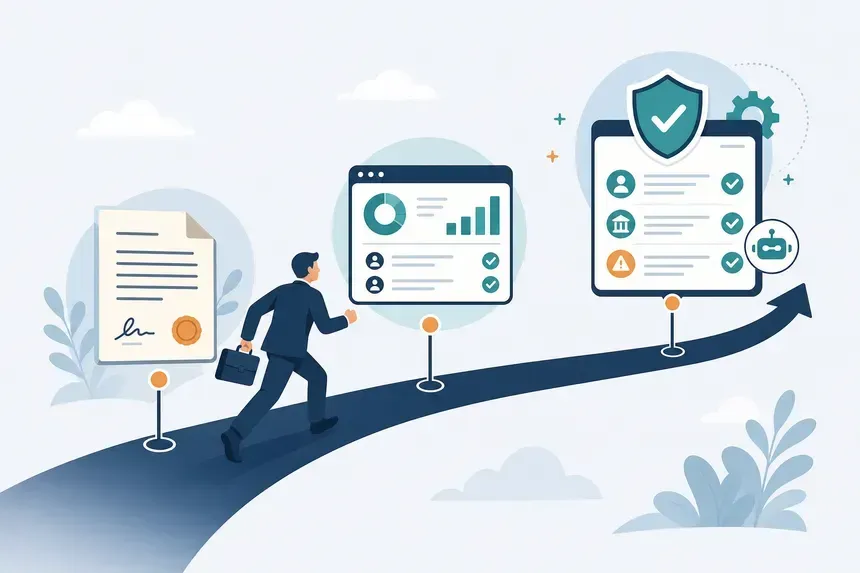
A repeatable process beats an ad hoc checklist every time. The 5R Review keeps due diligence considerations focused on the business use, the data, the model, the contract, and the oversight plan.
Step 1. Review the use case
Confirm the business purpose before procurement moves forward. What will the tool do, who will use it, and will it touch a regulated activity?
This is where compliance, legal, product, and engineering should all weigh in. If the use case affects customer outcomes, treat it as higher risk and move it into a deeper review path.
Step 2. Review the data flow
Map where the data comes from, where it moves, and who can access it. Include prompts, logs, training inputs, output storage, and any subcontractors.
Ask about retention, deletion, and whether the vendor can train on your data. If the tool crosses borders, document that too.
A simple vendor intake form is often enough to capture the data lineage clearly. The CFPB’s privacy materials and the NIST Privacy Framework are useful references here.
Step 3. Review the model controls
Ask how the model was trained, tuned, tested, and monitored. You want to know what data was used, what validation exists, and how drift is tracked over time.
If the tool influences decisions, ask for independent testing evidence or internal validation results. For financial institutions, the Federal Reserve, OCC, and FDIC model risk guidance gives a useful baseline for what good oversight should look like.
The retired SR 11-7 guidance still helps frame the same problem.
Step 4. Review the contract terms
The contract should support the controls you just reviewed.
Look for confidentiality, audit rights, incident notice, subcontractor limits, security obligations, liability terms, service levels, and offboarding rights.
If the vendor’s standard paper is too generic, push for a fintech-specific addendum. The OCC third-party bulletin is a good reminder that vendor governance does not stop at the sales contract.
Step 5. Review the ongoing oversight plan
Onboarding is not the finish line.
The final due diligence consideration is how the vendor will be watched after launch. Set a review cadence, assign owners, and decide what gets monitored monthly or quarterly.
If the AI changes, the data changes, or the incident profile changes, the review should reopen.
Due Diligence Checklist by Risk Area
The best reviews get specific. They ask for evidence that matches the actual risk, not just a general security packet.
Data, privacy, and security
Request security questionnaires, SOC reports, encryption details, access controls, and incident response procedures.
If the vendor touches sensitive consumer information, the due diligence considerations should also cover how it prevents misuse, exposure, or unfair treatment.
The CFPB’s circular on weak data protection is a useful reference: CFPB Circular 2022-04. If the vendor cannot explain who can see what data, the review is not done yet.
Fair lending, consumer compliance, and explainability
If the AI affects approvals, pricing, servicing, or disclosures, the review has to go deeper. Ask how the model supports adverse action logic, what human review exists, and whether bias testing has been done.
The CFPB has already made the point that complex algorithms do not remove compliance duties. See Circular 2022-03 and the CFPB’s page on Regulation B. If your team uses AI in credit decisions, those due diligence considerations are non-negotiable.
Governance, legal, and recordkeeping
Someone must own the decision and the evidence. That means clear approvals, escalation paths, and a clean record of what was reviewed, what was accepted, and what was rejected.
Keep that trail in Jira, Notion, or Confluence so teams can find it later. A regulator, auditor, or board member should be able to see the review without chasing email threads or Slack messages.
Business continuity and exit readiness
Ask what happens if the vendor fails, pauses service, or changes terms. Can you get your data back? Can you switch models? How long would the transition take?
That exit plan matters more than most teams admit. If the AI tool sits in a live customer flow, a bad offboarding plan can hurt revenue, operations, and trust at the same time.
Common Mistakes to Avoid
The biggest mistake is trusting a polished demo. Good interfaces can hide weak controls, vague governance, and missing evidence.
Another common miss is treating due diligence as a one-time event. AI models change. Data changes. Use cases expand. A review that worked at launch may be stale three months later.
Teams also get stuck when product, engineering, and legal review the vendor in separate lanes. That creates slow answers and inconsistent decisions. It also leaves gaps that templates will not catch.
How to Build an Ongoing Oversight Program
A vendor review only works if it stays alive after procurement. The goal is a process your team can reuse, not a binder that sits on a shelf.
Step 1. Set review triggers
Revisit the vendor after launch, after a model change, after a new data source is added, or after an incident. Tie the cadence to the risk tier, not to a random calendar date. For higher-risk tools, quarterly review is a practical baseline. Lower-risk tools may need less, but they still need event-driven checks when something changes.
Step 2. Assign clear owners
Give one person the business risk, one person the compliance review, and one person the technical check.
Procurement can help, but it should not be the only gatekeeper. A light RACI keeps the process moving and stops the common problem where everyone assumes someone else owns the decision.
Step 3. Create a repeatable process
Standardize the questionnaire, the approval path, and the evidence storage. That way, every new AI vendor does not start from zero. The NIST AI Risk Management Framework Playbook can help teams turn policy into daily work.
Conclusion
Due diligence considerations around AI vendors are not a checkbox. They are a lifecycle. If you review the use case, data flow, model controls, contract terms, and oversight plan, you reduce the chance that a new tool becomes a new problem.
For fintech teams, the real win is consistency. A simple review process makes it easier to launch faster, answer regulators with confidence, and keep vendor risk under control.
FAQs
Q: Should all AI vendors be treated the same?
A: No. A customer-facing model that affects decisions should face a deeper review than a simple internal productivity tool. The due diligence considerations should match the risk.
Q: How often should AI vendor reviews be refreshed?
A: Review high-risk vendors at least quarterly, and sooner if the model, data, or use case changes. Event-driven reviews matter just as much as calendar reviews.
Q: What evidence matters most when vendors use customer data?
A: Ask for access controls, retention rules, training rights, deletion terms, and incident procedures. If the vendor cannot explain the data flow clearly, that is a warning sign.
Q: What if a vendor will not share model details?
A: Do not accept vague answers without backup evidence. You may not need the source code, but you do need enough control evidence to assess bias, testing, and oversight.
Q: What is the difference between vendor management and model risk management?
A: Vendor management covers the third-party relationship, contract, and service oversight. Model risk management focuses on how the AI behaves, how it was tested, and how it will be monitored.
Q: When should compliance, legal, and engineering review together?
A: As early as possible. The best time is before procurement closes, not after launch dates are already set.