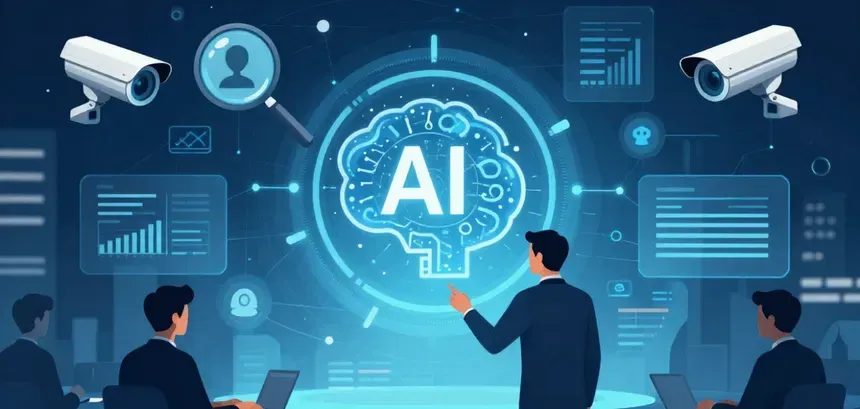
AI Bank Partner Diligence: 12 Questions to Expect
AI Bank Partner Diligence can stall fintech partnerships fast. Learn the 12 questions banks ask about AI use, data lineage, and controls.

Introduction
AI Bank Partner Diligence can stall a deal fast. A bank sends a questionnaire. The clock starts. Your team has to explain AI use, data controls, and oversight without sounding unsure.
Banks are not looking for a one-word answer. They want proof that your AI is controlled, traceable, and repeatable.
In this guide, you’ll get 12 questions to expect and a simple readiness method you can use before the next bank review.
How Bank Diligence Works
Banks now treat AI as more than a tech tool. It can touch third-party risk, model risk, operations, privacy, and compliance at the same time. That means review teams pull in compliance, legal, risk, operations, and sponsor bank stakeholders.
So “we use AI somewhere” is not enough. A bank wants to know exactly where AI sits in production, what it touches, who owns it, and how humans step in when something looks off.
The supervisory lens is already there. Banks are used to thinking in terms of model governance and vendor oversight, and guidance like the OCC’s model risk bulletin and third-party risk guidance shapes how they review AI vendors and embedded tools.
What banks are screening for
Banks are asking one plain question: can this AI create customer harm, compliance problems, or a messy audit trail? They are looking for hidden behavior. Data misuse. Weak oversight. No clean way to investigate a complaint.
If your AI touches onboarding, support triage, fraud review, or underwriting support, expect the bank to ask how those outputs are checked. For a broader governance lens, the NIST AI Risk Management Framework gives a clean way to map, measure, manage, and govern AI risk.
Your readiness standard
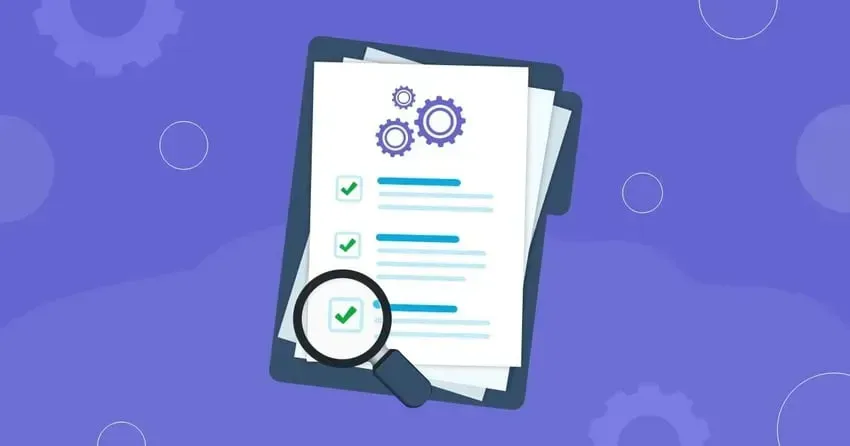
Do not improvise under pressure. The real goal is to answer the bank’s questions the same way every time, with documents that back up the answer. That is where a diligence packet helps. Think of it as a bank-ready set of policies, diagrams, logs, and owner assignments that shows how your AI works and how you keep it under control. When that packet is current, review cycles get shorter and the back-and-forth drops.
Questions on AI Use and Governance
This first group of questions is the bank’s way of mapping what the AI actually does. Keep the answers in plain business language, not technical jargon.
1. Where does AI touch the customer journey?
Start with every place AI affects the customer experience or an internal decision. That can include onboarding, support triage, fraud review, marketing personalization, collections support, underwriting support, or back-office routing. Then separate assistive AI from automated decision-making.
If the model suggests an action but a person approves it, say that clearly. If the model makes the call on its own, the bank will expect a stronger control story.
2. Who owns the model?
Banks want a named owner, not a vague group. The owner should be accountable for selection, approval, tuning, review, and retirement.
If you use vendor-managed AI and internal tools together, document both layers. Show who owns the vendor relationship, who reviews changes, and who signs off when a model version, prompt flow, or decision rule changes.
The OCC Model Risk Guidance is a useful reference because it reinforces inventories, governance, and ownership.
3. How transparent is the model?
Transparency means the bank can understand inputs, outputs, logic limits, and human override points. It does not mean every reviewer wants source code. It does mean they expect a plain-English description of what the model does and does not do. A black box creates more questions than it answers.
Even vendor-managed AI can work if you can describe review controls and escalation paths. If the model affects credit decisions, the CFPB’s circular on adverse action notices and complex algorithms is a strong reminder that explainability is not optional.
If you cannot explain the model in one minute, a bank reviewer will not trust it in ten.
Questions on Data Lineage and Privacy
The second group is about data. Banks want proof that the data feeding the AI is lawful, traceable, limited, and protected through its full lifecycle.
4. What data trains or feeds the AI?
Map the source systems first. Include internal datasets, customer data, third-party feeds, logs, prompts, and any enrichment data that enters the workflow. The bank cares because sensitive, regulated, or restricted data can change the risk fast. A simple lineage diagram often works better than a dense technical memo.
For dataset discipline, the OSAC guidelines for dataset development are a practical reference for provenance and usage limits.
5. Can you trace each output back to inputs?
This is where diligence gets real. If a customer disputes an outcome, can you show the inputs, the model version, the prompt, the timestamp, and the decision path? Keep logs, dataset records, version history, and review notes in one place.
If your team uses a source-to-output map, that is usually enough for a bank reviewer to see that the process is controlled. For privacy and data governance structure, the NIST Privacy Framework and the NIST data governance profile are both useful references.
6. How do you protect customer data?
Describe access controls, encryption, retention limits, vendor restrictions, and deletion practices in plain English. The bank wants to know who can see the data, where it lives, and when it gets removed.
If your AI touches personal data, tie your answer back to privacy obligations and any applicable state law requirements. The FTC’s privacy guidance hub and its article on privacy commitments in AI help frame this conversation without adding noise.
Questions on Controls and Response Plans
This section is the bank’s test of whether your AI is supervised, monitored, and ready for incidents. If your controls are thin, this is where the red flags usually appear.
7. What human review exists?
Tell the bank where humans review AI outputs before customers are affected. If a person can override a model recommendation, say who that person is and when they can step in. You should also document escalation thresholds.
If a decision affects pricing, access, or adverse action, the approval path may need a second review. The point is not to add friction. It is to show that no model is operating without accountability.
8. How do you monitor drift or errors?
Banks want to know how you spot changes over time. That includes model drift, vendor changes, new output patterns, and performance problems after a product or data update.
A simple cadence works well: weekly monitoring for higher-risk use cases, monthly review for lower-risk tools, and immediate re-testing when a major change happens.
If you want a practical place to anchor the approach, the NIST AI Resource Center is a credible source for evaluation and validation support.
9. What happens if something goes wrong?
Have an incident response story ready before the bank asks. That story should cover bad outputs, model failures, data leaks, consumer complaints, and vendor issues.
The bank will want to know how internal owners are notified, how the partner bank is informed, and how you stop the issue from spreading. Keep a post-incident review template ready. It shows that you can learn from the event instead of just reacting to it.
How to Build a Ready-to-Share Diligence Pack
This is where AI Bank Partner Diligence turns into a repeatable process instead of a scramble. The goal is simple: build one package that answers the same questions every bank asks, then keep it current.
Step 1. Gather the core evidence
Start with the basics: AI inventory, data map, policy set, approval workflow, testing summary, and incident plan. Then assign a named owner to each artifact and put version control around it so the packet does not go stale. This is also where outside help can save real time. If you are trying to move from reactive responses to a cleaner operating model, that support can make the difference.
Step 2. Package it for the bank
Do not send a pile of documents and hope for the best. Organize the materials into a simple folder structure or memo with short executive summaries for non-technical reviewers. Make the packet easy to scan.
A bank reviewer should be able to find the model description, data map, testing evidence, and incident process without hunting through six files.
Conclusion
Banks are not asking for perfect AI. They are asking for proof that AI is governed, traceable, and supervised.
If you can answer their diligence questions with a living process instead of a rushed packet, you cut friction and protect the partnership.
The smartest move is to build that readiness now. The next diligence request should feel like a normal checkpoint, not a launch blocker.
FAQs
Q: What is AI bank partner diligence?
A: It is the review banks use to evaluate how a fintech uses AI, manages risk, and protects customer outcomes before approving a partnership.
Q: Why do banks care about AI transparency?
A: They want to understand decision logic, limits, and oversight so they can judge regulatory, consumer, and reputation risk.
Q: What documents do banks usually ask for?
A: Most ask for policies, data maps, model descriptions, testing evidence, and incident response procedures.
Q: How do I prove data lineage?
A: Use source-to-output mapping, dataset inventories, logs, and version history to show where data comes from and how it changes.
Q: Can a fractional CCO help with this process?
A: Yes. A fractional CCO can organize the controls, documentation, and review cadence banks expect without adding full-time overhead.